fusion-fable
Fuse multiple frontier AI models into one synthesized answer via Claude Code
 Aigora Store 0 downloads
About this tool
Fusion-Fable is a Claude Code skill that sends the same prompt to multiple frontier models (Opus 4.8, GPT-5.5, Gemini 3.1 Pro) in parallel, then has Opus 4.8 judge and synthesize all responses into a single structured answer. It's designed for developers and researchers who want higher-quality answers on hard questions by leveraging independent reasoning paths and cross-model synthesis.
- Parallel blind fan-out to 2-3 models, then structured synthesis
- Auto-detects installed CLIs and picks the richest available panel
- Structured audit trail: consensus, contradictions, unique insights, blind spots
- Timestamped provenance files saved for every run
- Zero-setup dual-Opus panel; GPT-5.5 and Gemini panels activate when CLIs are present
Overview
Fusion-Fable
Fuse a panel of frontier models into one Fable-tier answer.
Fusion-Fable is a Claude Code skill that runs a hard question through a panel → judge pipeline. The same prompt is dispatched to several models in parallel — each answering independently with web search and bash, none seeing the others' work — and then Opus 4.8 judges every answer into a structured analysis (consensus, contradictions, partial coverage, unique insights, blind spots) and writes a final answer grounded in it.
The mechanism is independence, then synthesis. The diversity that makes a panel beat a single model is
harvested, not manufactured: running the same prompt independently yields different reasoning paths, tool
calls, and sources — even two cold runs of the same model diverge enough that synthesizing them beats
running it once. So there are no contrived "lenses" or personas; every panelist gets the task verbatim and
answers it straight. Fuse Opus 4.8 + Opus 4.8, or Opus 4.8 + GPT-5.5 (via the codex CLI), into a
result better than either alone — a Fable-tier fusion.
                      ┌──────────────┐
                 ┌──▶ │  panelist 1  │ ─┐   (web + bash, independent)
                 │    └──────────────┘  │
                 │    ┌──────────────┐  │   ┌──────────────┐
 prompt ──▶ fan ─┼──▶ │  panelist 2  │ ─┼─▶ │   Opus 4.8   │ ──▶ final answer
            out  │    └──────────────┘  │   │   (judge +   │     (grounded in
                 │    ┌──────────────┐  │   │  synthesize) │      the analysis)
                 └──▶ │  panelist 3  │ ─┘   └──────────────┘
                      └──────────────┘
              Opus 4.8 / GPT-5.5 / Gemini      consensus · contradictions ·
              (each answers blind)             partial · unique · blind spots
Opus 4.8 always judges and writes the final answer — the pipeline can't be reversed, because the panelist models can't call back out to spawn Opus.
The panels
| Slug | Panel | Requires |
|---|---|---|
opus4.8-4.8 | the same prompt run twice as 2 independent Opus 4.8 panelists → Opus judges | nothing — works everywhere |
opus4.8-gpt5.5 | Opus 4.8 + GPT-5.5 (codex) in parallel → Opus judges | the codex CLI |
opus4.8-gpt5.5-gemini3.1pro | Opus 4.8 + GPT-5.5 + Gemini 3.1 Pro in parallel → Opus judges | codex + agy CLIs |
The skill auto-detects which panelist CLIs are installed and uses the richest panel available, falling back gracefully when one is missing.
Install
git clone https://github.com/duolahypercho/fusion-fable.git
cd fusion-fable
./install.sh
This copies the skill to ~/.claude/skills/fusion and the slash commands to ~/.claude/commands,
then prints which panels your machine can run. Restart Claude Code (or run /reload-skills) afterward.
Override the target with
CLAUDE_CONFIG_DIR=/path/to/.claude ./install.sh.
Use it
Three ways, all equivalent under the hood:
- Natural language — just ask. The skill auto-triggers and picks the richest panel:
"Run this through Fusion: is it safe to
ALTER TABLE … ADD COLUMNon a 200M-row Postgres table in prod?" - Pinned slash commands:
/fusion-opus4.8 does my JWT refresh-rotation design have a replay hole? /fusion-gpt5.5 is git push --force-with-lease actually safe on a shared branch? /fusion-3 full 3-family panel (Opus 4.8 + GPT-5.5 + Gemini 3.1 Pro) - Force a panel in prose — "run the
opus4.8-gpt5.5Fusion on …".
Every run returns the same structure: a Final answer up top, then the audit trail —
Consensus / Contradictions / Partial coverage / Unique insights / Blind spots — with each point
attributed to the panelist that raised it, so you can see how the answer was assembled. Every run is also
written to a timestamped provenance file under ~/.claude/fusion-runs/ (raw panelist answers + analysis +
final answer) for auditing.
Requirements
- Claude Code, with the session running Opus 4.8 (panelist subagents and the judge inherit the session model — on another model the slug is nominal, not literal).
- For
opus4.8-gpt5.5: thecodexCLI installed and logged in to an account with GPT-5.5 access. The runner usescodex exec(tested againstcodex-cli0.139). It runs against a throwaway copy of the current repo/workdir with trusted local access so tools such asgh, local test runners, Docker, and SDK-managed toolchains behave like they do in your terminal without writing back to the live checkout. Each Fusion invocation uses its own temporary prompt/output directory, so concurrent runs in different Claude Code sessions do not read each other's GPT panelist artifacts. - For the 3-model panel: the
agy(Antigravity) CLI installed and its keyring seeded — runagyonce interactively to complete the Google OAuth, after which headless runs reuse that login.run_gemini.shworks around agy's print-mode bug (empty stdout under no TTY) by running it under a pseudo-TTY with a transcript-JSONL fallback and a hard anti-empty guard, so it never returns a silently empty answer. The pseudo-TTY is allocated by apty.fork()Python helper (_pty_run.py) so it keeps working when the orchestrator itself runs in a socket (cmux / headless), wherescriptaborts ontcgetattr.
Only the opus4.8-4.8 panel is truly zero-setup; the GPT-5.5 and Gemini panels light up once their
CLIs are installed and authenticated. Note: there is no timeout/gtimeout on stock macOS, so the runners
use a self-contained perl timeout helper (FUSION_TIMEOUT, default 300s per panelist).
What's in here
skills/fusion/
  SKILL.md                  detect → preflight → blind fan-out → judge → grounded final → save
  scripts/
    _fusion_lib.sh          shared helpers: perl-based per-panelist timeout, have()
    _pty_run.py             pty.fork() runner so agy gets a TTY even under socket stdio (cmux/headless)
    detect_panel.sh         picks the richest available panel
    preflight.sh            non-blocking token/call estimate + Codex cap reminder
    run_codex.sh            runs the GPT-5.5 panelist (web + bash) with a timeout, captures its answer
    run_gemini.sh           runs the Gemini 3.1 Pro panelist via agy (pseudo-TTY + transcript fallback)
    save_run.sh             writes the timestamped provenance .md to ~/.claude/fusion-runs/
  references/
    panel.md                why independent parallel runs (no lenses) — the panel mechanism
    judge_rubric.md         the structured analysis + grounded final answer
commands/
  fusion-opus4.8.md         /fusion-opus4.8  (pinned opus4.8-4.8 panel)
  fusion-gpt5.5.md          /fusion-gpt5.5   (pinned opus4.8-gpt5.5 panel)
  fusion-3.md               /fusion-3        (pinned full opus4.8-gpt5.5-gemini3.1pro panel)
install.sh                  copies the above into ~/.claude
Why a panel beats one model
On the DRACO deep-research benchmark, OpenRouter found that fusing model answers consistently beats the individual models — and that a meaningful chunk of the lift comes from the synthesis step itself, not just from mixing architectures: two independent runs of one model, synthesized, beat that model run once. Fusion-Fable implements that same independence-then-judge pipeline locally in Claude Code.
Cost & latency
A panel costs roughly N× a single answer in tokens and runs as slow as its slowest panelist. That's the deliberate trade: spend more to stop being confidently wrong where that's expensive. For quick or low-stakes questions, a single direct answer is the right call.
License
MIT — see LICENSE.
Synced from github.com/duolahypercho/fusion-fable — updates automatically.
More in this category
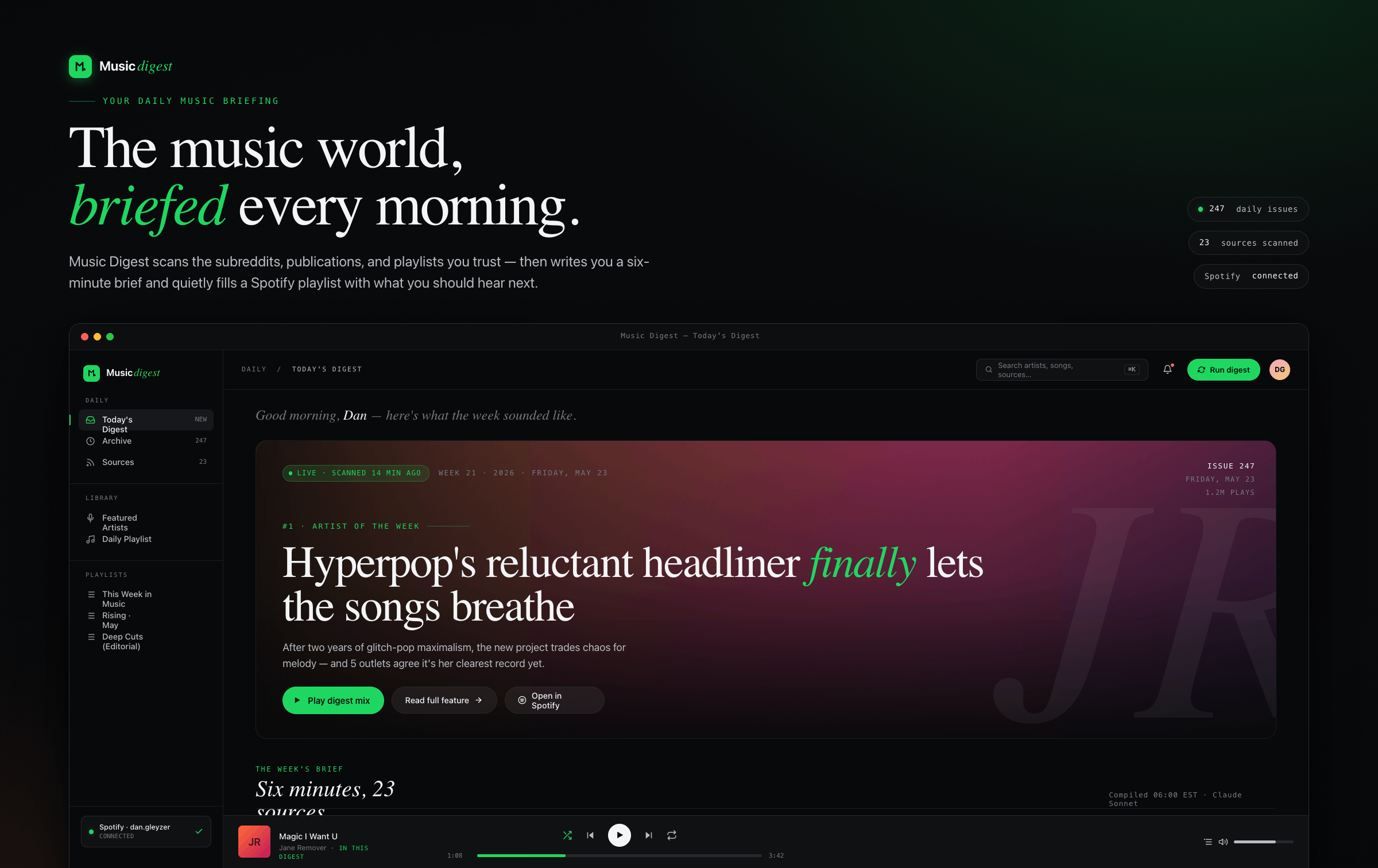
music-digest
Music Digest is an Electron desktop app that scrapes music news and trends from Reddit, music publications, an…
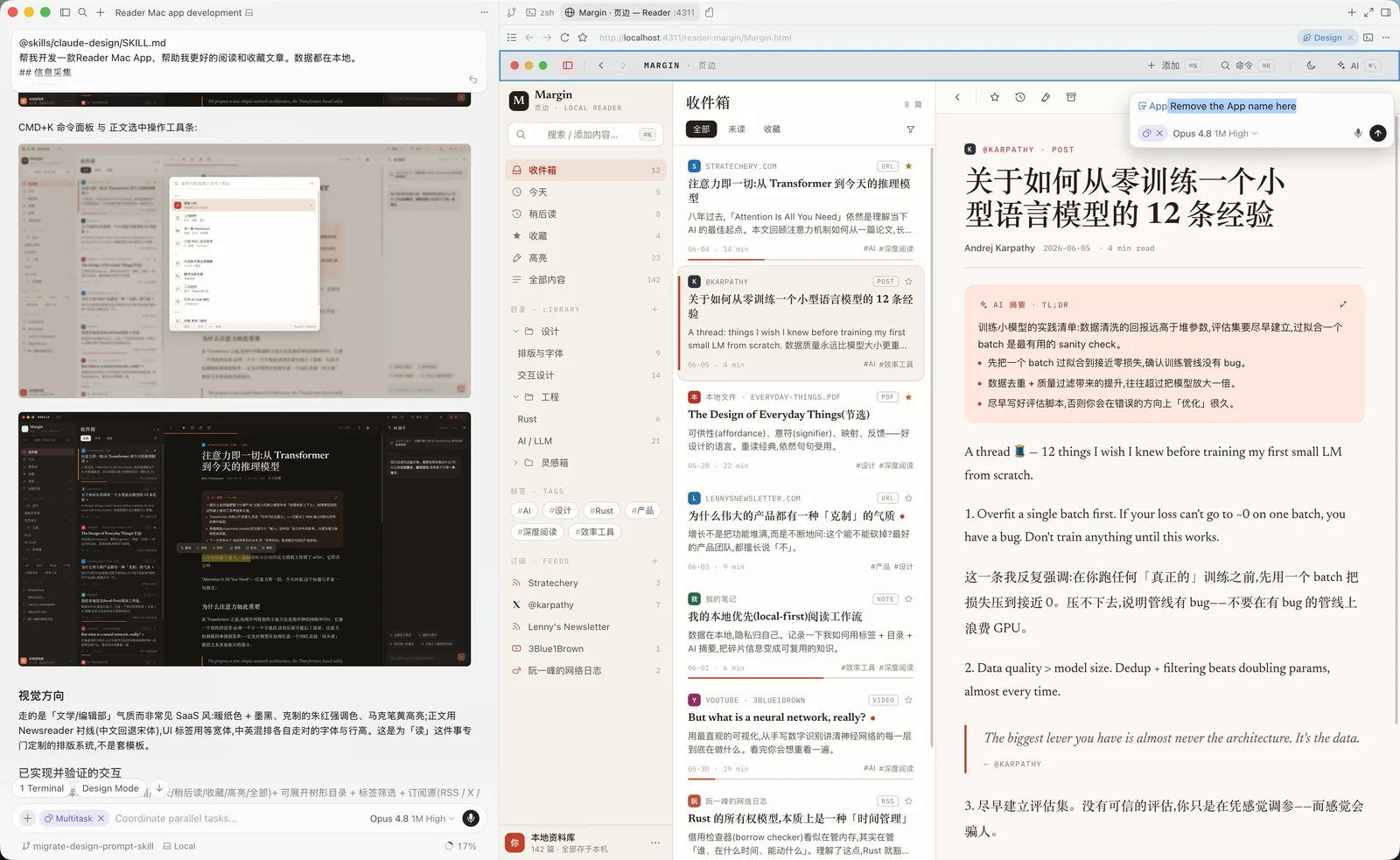
baoyu-design
baoyu-design packages the Claude Design engine as a portable Agent Skill that works inside local coding agents…
Aigora Store
ponytail
Ponytail is a plugin for AI coding agents that enforces a minimalist decision framework before any code is wri…
fanbox
FanBox is an Electron-based desktop app that combines a local file browser, embedded terminal, and live previe…
Aigora Store